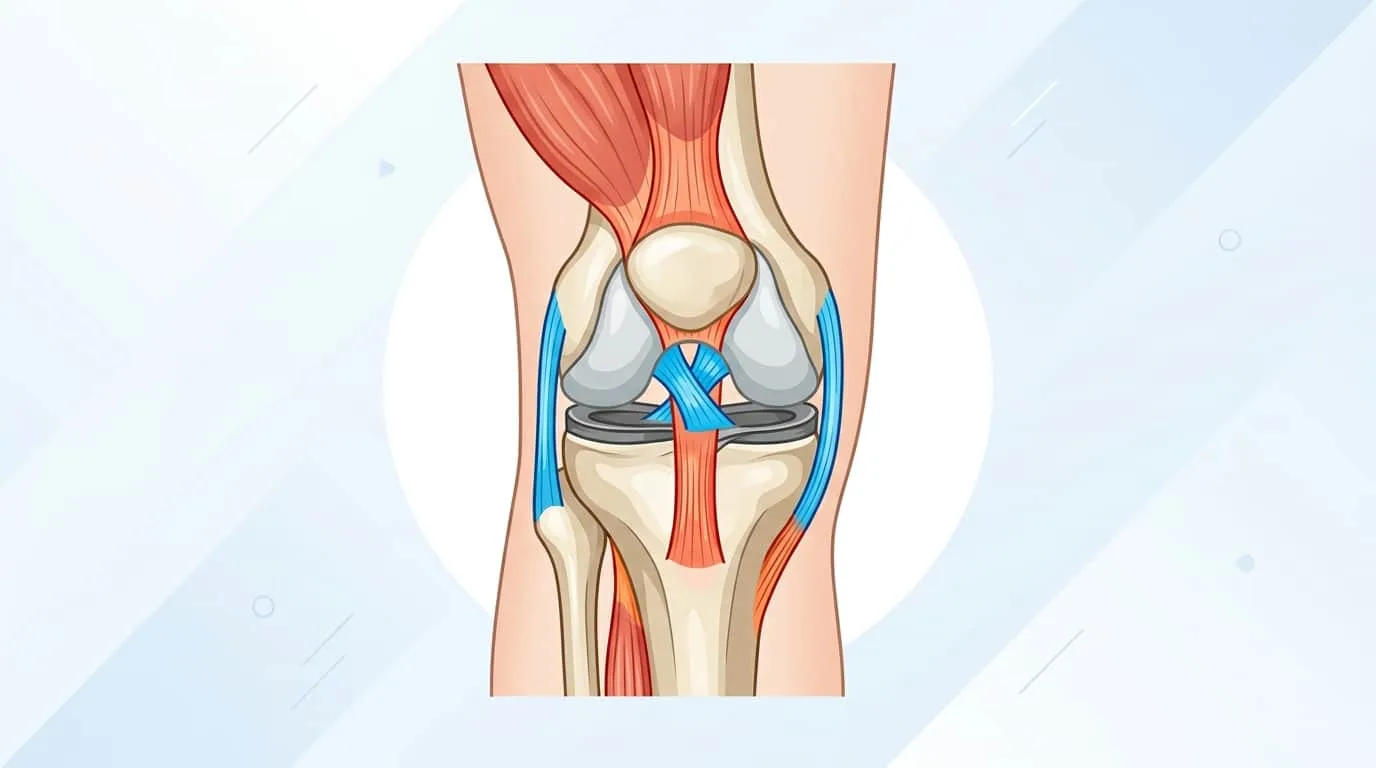
The main difference between tendons and ligaments is what they connect in your body. Tendons attach muscles to bones, allowing you to move your joints. Ligaments attach bones to other bones, keeping your joints stable and secure. Tearing a tendon limits movement, while tearing a ligament creates joint instability.
Joint pain can stop you right in your tracks, especially when you live an active life here in Central Florida. Many patients come into our clinic holding their knee or ankle, unsure if they sprained a ligament or strained a tendon. Knowing the difference between tendons and ligaments helps you understand your injury and recovery timeline. If you need immediate help diagnosing joint pain, contact Central Florida Bone & Joint Institute at (386) 775-2012.
What Are Tendons and What Do They Do?
Tendons are tough, flexible bands of fibrous tissue that connect your muscles to your bones. When your muscle contracts, the tendon pulls the attached bone, allowing you to move. Your Achilles tendon and patellar tendon are common examples. Without tendons, your muscles would squeeze without actually moving your body.
Composition and Common Injuries
Tendons consist mostly of collagen fibers arranged in parallel bundles. This structure makes them highly elastic and capable of withstanding heavy loads. However, overuse easily damages them.
Tendinitis occurs when a tendon becomes inflamed from repetitive stress. We see this often in golfers playing on the courts in Lake Nona. Tendon ruptures happen when the tissue tears completely. Recovering from a surgically repaired tendon often requires 4 to 6 months of dedicated physical therapy.
What Are Ligaments and Why Do We Need Them?
Ligaments are strong bands of tissue that connect one bone to another bone inside a joint. They act like sturdy ropes that hold your skeleton together and prevent your joints from bending the wrong way. The anterior cruciate ligament (ACL) in your knee is the most well-known ligament.
Structure and Joint Sprains
Unlike tendons, ligaments have a crisscross fiber arrangement that provides multi-directional stability. They are less elastic than tendons. If you stretch a ligament too far, it stays stretched or tears.
Based on the thousands of joint evaluations we completed last year, ligament sprains are our most common acute injury. Grade 1 sprains stretch the ligament slightly, while Grade 3 sprains represent a complete tear. Fixing a completely torn ACL usually costs between $9,000 and $15,000, depending on the surgical facility and your specific insurance plan.
What Is the Real Difference Between Tendons and Ligaments?
The true difference between tendons and ligaments comes down to function and connection. Tendons connect muscle to bone to create movement, while ligaments connect bone to bone to provide stability. Ligament injuries cause joint looseness, whereas tendon injuries cause weakness and painful movement.
Micro-Case Study: ACL Tear vs. Achilles Tendonitis
To understand the difference between tendons and ligaments, look at two common athletic injuries we treat in Orlando.
Consider a local soccer player who plants their foot and twists their knee. They hear a loud pop, and their knee gives out. That is an ACL tear (a ligament injury). The knee loses stability because the bone-to-bone connection broke.
Now consider a runner training on the paved trails around Winter Park. They develop a burning pain in the back of their heel that worsens when pushing off the ground. That is Achilles tendonitis (a tendon injury). The joint remains stable, but the muscle-to-bone connection is inflamed and makes movement painful.
How Does This Impact Your Active Florida Lifestyle?
Understanding your joint anatomy helps you prevent injuries while enjoying Florida's year-round outdoor weather. Proper warm-ups and strength training protect both your stabilizing ligaments and moving tendons. If you experience sharp pain or a pop while exercising, stop immediately and consult a local orthopedic specialist.
Prevention and Treatment Options
Keeping your muscles strong takes the stress off your tendons and ligaments. If you do suffer an injury, you have multiple treatment paths. We offer comprehensive knee pain treatments for both ligament and tendon damage.
For partial tears and chronic inflammation, our Orthopedic Center for Regenerative Medicine provides non-surgical options like PRP therapy. About 70 percent of our patients report significant pain reduction within six weeks of regenerative treatments. If you cannot make it into the office immediately, you can schedule a telemedicine appointment for a rapid initial evaluation.
How to Search for the Right Orthopedic Care in Florida
Using the correct medical terms helps you find the most accurate health information online. When you search for the difference between tendons and ligaments, you get results tailored to your specific symptoms.
Searching for a "sprained tendon" confuses search engines because tendons suffer strains, while ligaments suffer sprains. Knowing the proper terminology ensures you find the right specialist for your specific joint issue.
What Is the Bottom Line on Tendon and Ligament Health?
Your tendons and ligaments work together to keep you moving safely. Tendons power your movement, while ligaments keep your joints stable and secure. Treat joint pain early before a minor strain or sprain becomes a severe tear requiring surgery.
Do not ignore lingering joint pain. Contact Central Florida Bone & Joint Institute at (386) 775-2012 to schedule an evaluation with our local orthopedic experts.