Elbow pain that won't quit is more than an inconvenience. For DeBary residents who stay active on the courts at Gemini Springs Park or spend long hours on a job site in Deltona, lateral epicondylitis can bring daily life to a grinding halt. If you're dealing with that sharp, nagging ache on the outside of your elbow, you need answers fast. Contact Central Florida Bone & Joint Institute at (386) 775-2012 to schedule an evaluation today.
What Is Lateral Epicondylitis (Tennis Elbow)?
Lateral epicondylitis is inflammation of the tendons that attach your forearm muscles to the bony bump on the outside of your elbow. The pain starts at that attachment point and can radiate down your forearm, making gripping, lifting, or even turning a doorknob genuinely difficult. Despite the name, only about 5% of tennis elbow cases actually come from playing tennis. Most cases develop from repetitive arm and wrist motions on the job or during recreational sports.
The condition affects roughly 1–3% of adults each year, with people between the ages of 40 and 60 seeing the highest rates. Florida's active adult population, with year-round outdoor recreation and physically demanding trades work, sees this injury often.
What Causes Tennis Elbow in Florida Athletes and Workers?
Overuse and repetitive strain cause the vast majority of tennis elbow cases. The forearm extensor muscles, particularly the extensor carpi radialis brevis (ECRB), are under constant stress during repeated wrist and arm movements. Over time, small tears develop in the tendon, leading to pain and weakness.
Common causes our team sees in Central Florida patients include:
- Racket sports: Tennis, pickleball, and racquetball are all popular here, and poor technique or an ill-fitting grip size puts direct strain on the elbow tendon.
- Manual trades: Painters, plumbers, carpenters, and electricians make up a large portion of our patients in the DeBary and Orange City area. Repeated gripping, hammering, and wrenching movements are a major trigger.
- Gardening and yard work: Florida homeowners who spend weekends maintaining their landscaping put repeated stress on their wrists and forearms.
- Computer work: Extended keyboard and mouse use, especially with poor arm positioning, is an increasingly common culprit.
How Do You Know If You Have Tennis Elbow?
Tennis elbow produces a cluster of recognizable symptoms that tend to get worse gradually over days or weeks. Catching it early makes treatment significantly more effective and can cut your recovery time from several months down to 6–8 weeks with the right approach.
Watch for these signs:
- Pain or burning on the outer elbow: The discomfort often starts mild and worsens with activity.
- Weak grip strength: You may notice trouble holding a coffee cup, shaking hands, or carrying grocery bags.
- Pain that radiates down the forearm: The ache follows the path of the extensor tendons toward the wrist.
- Morning stiffness: The elbow feels tight and sore after rest, then loosens up as you move.
- Pain with specific movements: Lifting with your palm down, turning a screwdriver, or typing can all aggravate symptoms.
Don't wait until the pain becomes constant. Patients who come in early typically avoid surgery entirely.
What Are the Best Non-Surgical Treatments for Tennis Elbow?
Most tennis elbow cases, roughly 85–90%, resolve without surgery when treated consistently with conservative methods. The key is following a structured approach rather than hoping it gets better on its own.
Rest and activity modification come first. This doesn't mean doing nothing. It means identifying and reducing the specific movements that aggravate the tendon while keeping the rest of your body active. Florida's warm climate makes low-impact alternatives like swimming or walking easy to maintain year-round.
Counterforce bracing takes pressure off the irritated tendon during daily activity. A well-fitted strap worn just below the elbow can reduce pain by up to 80% during use. Your provider can help you find the right fit, since braces that are too tight or too loose don't help.
Physical therapy is where real, lasting recovery happens. A targeted program focuses on eccentric strengthening exercises, which have the strongest evidence base for tendon healing. Expect 6–12 weeks of consistent work. Patients who complete a full PT program see 70–85% improvement in pain and function.
Ice and anti-inflammatory medication can manage acute flare-ups. Ice the outside of the elbow for 15–20 minutes after activity. Over-the-counter NSAIDs help with short-term pain control, though they don't speed up tendon healing on their own.
Our orthopedic telemedicine service is a convenient option for patients who need an initial evaluation or a follow-up visit without driving in. New patient self-pay telemedicine appointments start at $75, and most insurance plans cover the service.
What Happens If Conservative Treatment Doesn't Work?
When 3–6 months of conservative care haven't resolved the pain, it's time to look at more targeted medical interventions. An orthopedic surgeon in DeBary, Florida can evaluate the tendon directly and recommend the most appropriate next step.
Corticosteroid injections provide fast pain relief, often within 2–3 days, and can reduce inflammation enough to allow you to participate in physical therapy. They're most effective when used as a bridge to rehabilitation rather than a standalone treatment.
Platelet-Rich Plasma (PRP) therapy is an option our team at Central Florida Bone & Joint Institute finds particularly valuable for chronic cases. PRP uses growth factors from your own blood to promote tendon healing at the cellular level. Unlike steroids, PRP addresses the underlying degeneration rather than just the symptoms. Our regenerative medicine program includes PRP for tendon injuries like tennis elbow, and pricing is available upon request.
Surgery is a last resort, needed in fewer than 10% of cases. When it is necessary, an orthopedic surgeon in DeBary, Florida can perform a minimally invasive procedure to remove the damaged tendon tissue. Recovery typically takes 3–6 months to full activity.
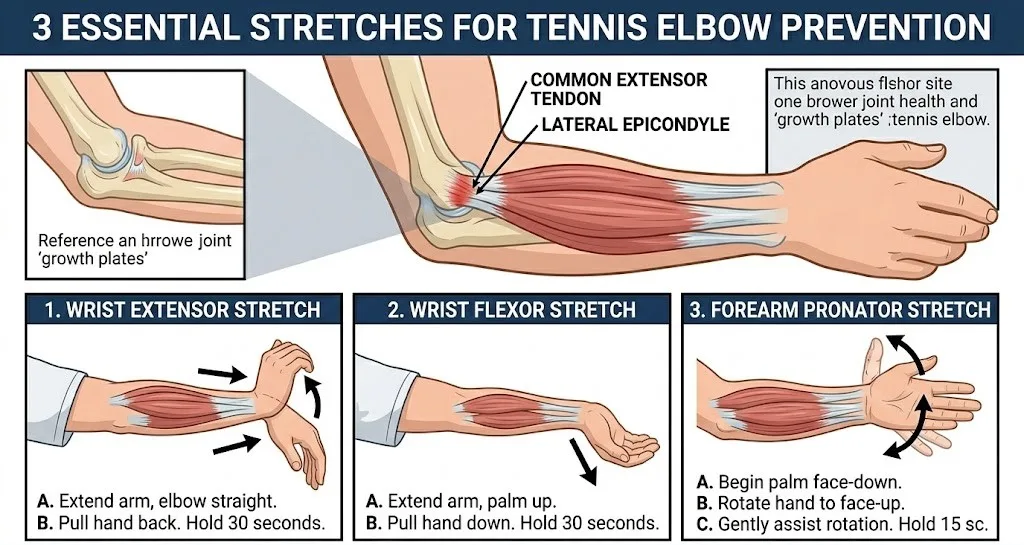
3 Essential Stretches for Tennis Elbow Prevention
Before you hit the pickleball courts at Lake Beresford Park or pick up your tools for the day, take five minutes to prepare your forearm tendons. These three stretches target the extensor muscles most commonly involved in tennis elbow.
1. Wrist Extensor Stretch
Extend your arm straight out in front of you, palm facing down. Use your other hand to gently bend your wrist downward until you feel a stretch along the top of your forearm. Hold for 30 seconds. Repeat 3 times on each side.
2. Wrist Flexor Stretch
Extend your arm with your palm facing up. Gently pull your fingers back toward your body with your opposite hand. Hold for 30 seconds. Repeat 3 times. This stretch balances the forearm musculature and reduces uneven tendon stress.
3. Forearm Pronation/Supination
Hold a light hammer or water bottle with your elbow bent at 90 degrees. Slowly rotate your palm from facing up to facing down in a controlled motion. Do 3 sets of 15 repetitions. This exercise builds tendon resilience through its full range of motion.
Perform these daily, especially before and after repetitive activity.
How to Prevent Tennis Elbow from Coming Back
Prevention is about changing the habits and equipment choices that originally caused the problem.
Check your equipment fit. A tennis or pickleball racket with the wrong grip size dramatically increases forearm stress. Your grip circumference should equal the distance from your ring finger's middle crease to your palm's base line. Have a professional fit your racket if you're unsure.
Strengthen your forearm year-round. Eccentric wrist curls, performed 3 times per week with light resistance, are one of the most well-supported exercises for tendon health. A physical therapist or an orthopedic surgeon in DeBary, Florida can design a program specific to your activity level and work demands.
Pace your activity. One of the most common patterns we see is patients who are sedentary during the week and overdo physical activity on weekends. Gradual increases in training volume, no more than a 10% week-over-week increase, protect tendons from accumulative strain.
Optimize your workstation. If you work at a desk, your keyboard should sit at elbow height with your wrists in a neutral, flat position. A vertical mouse reduces the forearm rotation that strains the extensor tendons over time.
Get Back to the Court or Job Site Safely
Tennis elbow doesn't have to keep you on the sidelines. With the right treatment, most patients return to full activity within 3–6 months, and those who start care early often recover faster. The critical step is getting an accurate diagnosis so you're treating the right problem with the right plan.
Central Florida Bone & Joint Institute serves patients throughout DeBary, Orange City, Lake Mary, and the surrounding communities. Our orthopedic team treats lateral epicondylitis and a full range of elbow conditions, with in-person appointments available Monday through Friday, 8am to 5pm.
Call (386) 775-2012 to schedule your evaluation or request an appointment online. Don't let elbow pain become a long-term problem when effective treatment is this close.