Florida's heat and humidity don't just affect your comfort level — they can directly impact your joints. If your arthritis pain seems to flare up when the weather shifts or the air feels thick with moisture, you're not imagining it. Many residents across the DeLand area and beyond notice real, measurable changes in how their joints feel as conditions change. Central Florida Bone & Joint Institute can help you build a plan to manage those symptoms year-round. Call (386) 775-2012 to schedule an appointment.
Does Florida's Humidity Make Arthritis Worse?
High humidity can increase joint inflammation, making arthritis symptoms more noticeable. Florida's average relative humidity sits between 70% and 90% for much of the year, especially from June through September. When moisture levels stay elevated for extended periods, soft tissue around the joints tends to swell slightly, which puts extra pressure on already sensitive areas. That pressure is what many patients describe as a deep ache or stiffness that won't loosen up.
This matters because ignoring the connection between climate and joint pain often leads people to adjust their medications or activity levels unnecessarily. The real issue isn't always the arthritis getting worse — it's the environment making existing symptoms harder to tolerate.
Why Do Barometric Pressure Changes Trigger Pain Flares?
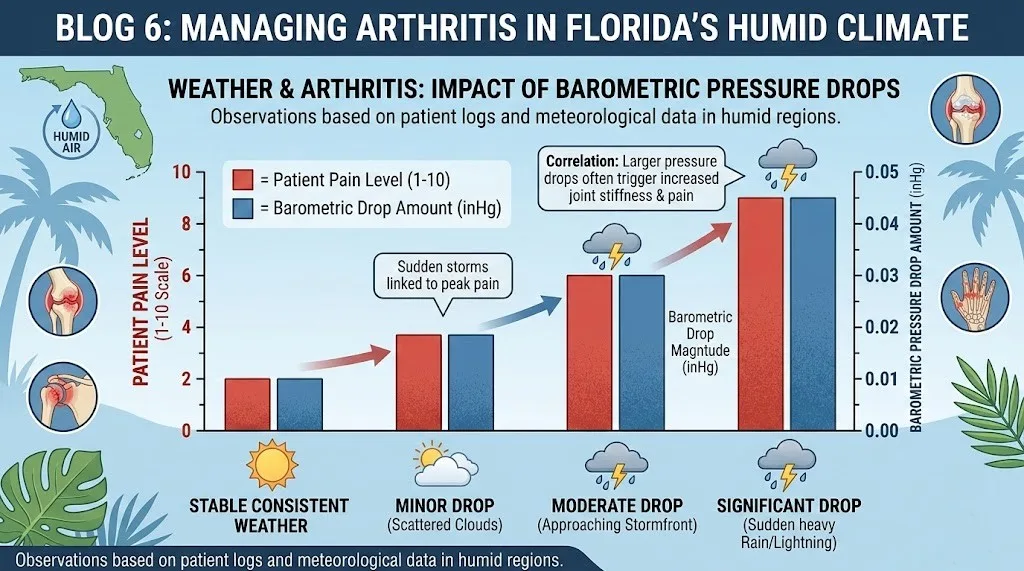
Drops in barometric pressure cause the tissues around your joints to expand, which increases pressure inside the joint capsule. Florida sees frequent pressure swings, particularly during afternoon thunderstorms from May through October and when tropical systems move through the region. Residents near Lake Woodruff National Wildlife Refuge and throughout the St. Johns River valley tend to experience these pressure changes acutely, as storm systems track along those corridors regularly.
Studies have found that a drop of just 10 millibars in barometric pressure correlates with a measurable increase in reported joint pain among arthritis patients. When you combine that with high baseline humidity, the effect compounds. Tracking local weather through a simple app and noting your pain levels over 2 to 3 weeks can reveal patterns that help you and your care team plan ahead.
Indoor Climate Control: Practical Steps That Actually Help
Keeping your indoor humidity between 40% and 50% is one of the most direct things you can do to reduce inflammation-related discomfort at home. A whole-home dehumidifier runs $1,500 to $3,000 installed, while a portable unit for a bedroom or living area costs between $150 and $400. Either option pays dividends when Florida's summer humidity pushes into the 80-plus percent range outdoors.
A few additional steps that our team consistently recommends:
- Set your thermostat to 72 to 74 degrees rather than blasting cold air, which can stiffen joints in the opposite direction
- Use ceiling fans to keep air circulating without dropping the temperature too aggressively
- Check HVAC filters every 30 days during summer — a clogged filter reduces your system's ability to pull moisture from the air
- Keep morning routines gentle by stretching before you move through the house, especially on high-humidity days
What Low-Impact Exercise Works Best in Florida's Climate?
Swimming, water aerobics, and walking on flat, shaded trails are the top three options for arthritis patients in Central Florida's outdoor environment. Water-based exercise is particularly effective because the buoyancy reduces joint load by up to 90% compared to land-based movement, while the resistance still builds muscle support around affected joints.
Gemini Springs State Park in DeLand offers flat, well-maintained trails that are ideal for early morning walks before heat index values climb. Plan outdoor activity before 9 a.m. or after 6 p.m. from May through September. Staying active 4 to 5 days per week — even for 20-minute sessions — has been shown to reduce arthritis-related stiffness more effectively than rest alone.
Avoid high-impact activities like running on pavement or court sports during flare periods. Resistance bands and chair-based strength work are solid alternatives when outdoor conditions aren't cooperating.
Local Resources and Dietary Adjustments for Year-Round Symptom Management
Central Florida has strong access to fresh produce year-round, which makes an anti-inflammatory diet easier to sustain here than in many parts of the country. Focus on foods that research consistently connects to reduced joint inflammation:
- Fatty fish (salmon, mackerel, sardines) — aim for two servings per week
- Leafy greens like spinach and kale, available at local farmers markets in Orange City and throughout Volusia County
- Tart cherries and berries, which contain anthocyanins shown to reduce inflammatory markers
- Olive oil as your primary cooking fat
Reducing processed foods, refined sugars, and alcohol is equally effective. Hydration is critical in Florida's heat — 8 to 10 glasses of water daily supports joint lubrication and helps offset fluid loss from perspiration.
Our team also works alongside patients exploring non-surgical options through our regenerative medicine services, including platelet-rich plasma (PRP) and stem cell therapy, which can address the underlying tissue damage driving chronic joint pain without requiring surgery or extended recovery time.
For patients managing symptoms between visits or those who find in-office appointments difficult to schedule around work or mobility challenges, our orthopedic telemedicine service provides direct access to our providers from home. New patient self-pay telemedicine consultations start at $75, and most insurance plans cover telemedicine visits.
When Should You See an Orthopedic Specialist in the DeLand Area?
You should see an orthopedic surgeon in DeLand, Florida if your joint pain lasts more than six weeks, worsens despite self-management, limits daily activities, or begins affecting your sleep. Those are signs that the condition needs professional evaluation, not just lifestyle adjustments.
Many patients we see have spent months managing symptoms on their own before coming in. By that point, some have developed compensatory movement patterns — adjusting how they walk or reach — that cause secondary issues in the knees, hips, or spine. Earlier intervention typically means more conservative treatment options and faster improvement.
An orthopedic surgeon in DeLand, Florida can order imaging, rule out structural damage, and build a treatment plan that accounts for how Florida's climate affects your specific condition. At Central Florida Bone & Joint Institute, our providers cover a full range of orthopedic specialties including hip, knee, spine, and joint care, so patients don't need multiple referrals for complex cases.
If pain management alone isn't cutting it, our team can also discuss injection therapies, physical therapy referrals, and surgical options when appropriate — all in one place, with locations in Orange City and Lake Mary.
Ready to Get Your Joint Pain Under Control?
Living with arthritis in Florida's climate is manageable with the right plan. You don't have to just push through flare-ups or assume nothing can be done. Whether your symptoms are mild or significantly affecting your quality of life, getting a professional evaluation gives you a clear picture of what's happening and what can help.
Central Florida Bone & Joint Institute is accepting new patients. Call (386) 775-2012 to schedule an appointment with an orthopedic surgeon in DeLand, Florida, or request a telemedicine consultation if getting to the office is a challenge right now. Our team is here to help you stay active and comfortable, no matter what Florida's weather is doing outside.