Hip pain does not have to end your active lifestyle. If a stiff, aching joint keeps you off the running trails or tennis courts, you are likely looking for a lasting fix. Many younger, highly active patients worry that traditional surgery means giving up their favorite high-impact sports.
Need help choosing the right procedure? Contact Central Florida Bone & Joint Institute at (386) 775-2012 to schedule a consultation today.
Our team routinely helps patients across Central Florida get back to doing what they love. When conservative treatments stop working, you face a major choice between two surgical routes. Understanding the differences between hip resurfacing and a total hip replacement helps you make an informed decision about your body and your future.
What Is Hip Resurfacing?
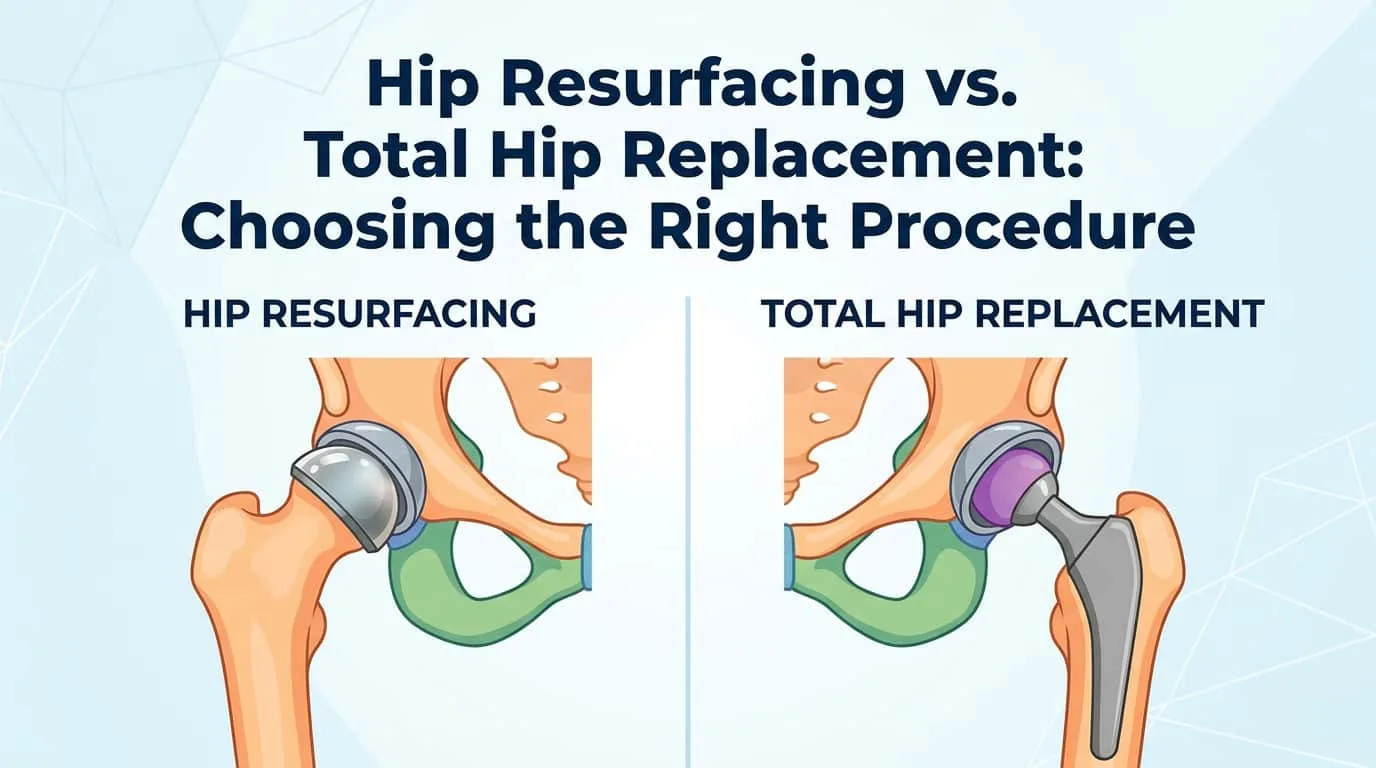
Hip resurfacing is a bone-conserving surgery where we trim the damaged cartilage and cap the thigh bone with a smooth metal covering. This procedure typically costs between $15,000 and $25,000 in Central Florida. It preserves your natural femoral head instead of removing it completely. We pair this capped bone with a matching metal cup placed in your hip socket.
This approach appeals to athletes and patients under 60 who want to maintain high-impact activities. Because it saves more of your natural bone, it leaves the door open for future surgeries if needed later in life. We see many patients from areas like Lake Nona and Heathrow who choose this option to keep up with their demanding physical routines. The larger implant size also significantly reduces the risk of dislocation during extreme movements.
What Is a Total Hip Replacement?
Total hip replacement removes the entire damaged femoral head and replaces it with a prosthetic stem and ball. The procedure usually takes one to two hours and has a remarkable 95% success rate over 15 years. We insert a metal stem down into your thigh bone and place a specialized cup in the pelvic socket.
This procedure remains the gold standard for treating severe arthritis. It provides predictable pain relief and restores basic mobility for daily life. While modern implants are incredibly durable, they do face wear and tear from high-impact sports like running or martial arts. If you are looking for an orthopedic surgeon Lake Mary, Florida, our team carefully evaluates your bone quality to determine if this traditional approach offers the safest path to a pain-free life.
How Do These Procedures Compare?
The biggest difference lies in bone preservation. Hip resurfacing saves your upper thigh bone, while a total replacement removes it entirely. This structural difference directly impacts your biomechanics and recovery timeline.
With resurfacing, patients often report that their hip feels more "natural" during complex movements. However, total hip replacements boast a longer track record of reliable outcomes for a wider variety of patients. If a resurfaced hip eventually wears out, surgeons can easily convert it to a total hip replacement. Revising a total hip replacement requires a much more complex surgery.
Which Patients Make the Best Candidates?
Your age, gender, and bone density play massive roles in determining your eligibility. Hip resurfacing works best for men under 60 with strong, healthy bone stock. Women face a slightly higher risk of complications due to naturally smaller bone structures and the risk of osteoporosis.
If you suffer from severe bone loss or specific hip deformities, a total hip replacement provides the most secure and reliable fix. When you visit an orthopedic surgeon Lake Mary, Florida, we perform detailed imaging to assess your exact bone architecture. We also consider your activity goals. A patient wanting to run marathons around Cranes Roost Park has very different needs than someone who prefers light walking and swimming.
What Are the Potential Risks?
Both surgeries carry standard surgical risks like infection, which occurs in less than 1% of cases. Blood clots and nerve damage also remain rare but possible complications.
Hip resurfacing carries a unique risk of a femoral neck fracture. Because the native bone remains intact, it can occasionally crack under the new metal cap. Total hip replacements face a slightly higher risk of dislocation, especially in the first six weeks. We monitor all our patients closely and use advanced surgical techniques to minimize these specific risks.
What Should You Expect During Recovery?
Most patients leave the hospital within 24 to 48 hours after either procedure. Initial recovery takes about two to six weeks. During this time, you will rely on crutches or a walker to get around safely.
Physical therapy starts immediately. You will learn specific exercises to rebuild your strength and restore your range of motion. Resurfacing patients often return to high-impact activities within six months. Total replacement patients usually stick to low-impact exercises like cycling or using the elliptical. Should you experience any sudden pain or swelling during your rehabilitation, our Orthopedic Urgent Care in Orange City, FL provides immediate access to specialized care.
Taking the Next Step Toward Relief
Living with chronic hip pain drains your energy and limits your freedom. By understanding your surgical options, you can take control of your health and plan your return to an active life. Sometimes, patients even explore alternative options through our Orthopedic Center for Regenerative Medicine before committing to surgery.
Finding the perfect treatment requires a personalized approach. Every patient brings a unique anatomy and distinct lifestyle goals to the table. As a trusted orthopedic surgeon Lake Mary, Florida, we take the time to evaluate your specific situation and recommend the absolute best path forward.
Ready to get back in the game? Contact Central Florida Bone & Joint Institute at (386) 775-2012 to schedule your comprehensive evaluation today.