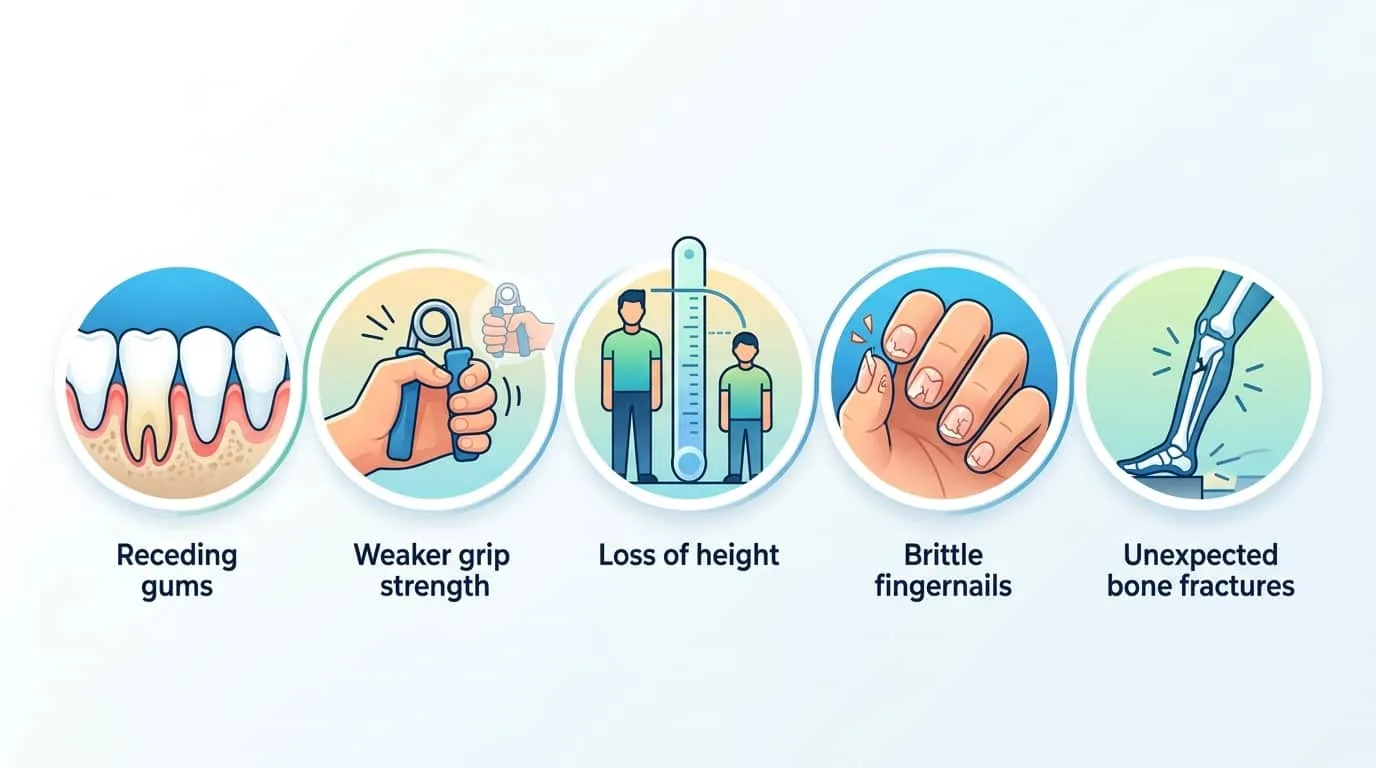
The five main symptoms of osteoporosis include chronic back pain from collapsed vertebrae, gradual loss of height, a stooped posture, easily fractured bones from minor falls, and receding gums. Early detection through bone density scanning helps prevent severe complications and keeps your bones strong.
Osteoporosis silently weakens your bones over time. Many Florida residents live active lives without realizing their bone density is rapidly declining. You might feel perfectly fine until a sudden fracture changes everything. If you suspect bone density issues, contact Central Florida Bone & Joint Institute at (386) 775-2012 for an evaluation. Understanding early warning signs helps you take control of your health before a catastrophic injury occurs.
Patients frequently ask our team, What are 5 symptoms of osteoporosis? We hear this question constantly from seniors in Winter Park and Lake Nona. By knowing exactly what to look for, you can protect your mobility and independence.
What Is Osteoporosis, and Why Is It Called a Silent Disease?
Osteoporosis is a medical condition where your bones lose mass and density over time. Doctors call it a silent disease because you cannot feel your bones weakening. Most patients only discover they have the condition after breaking a wrist or hip from a minor fall.
In our years serving Central Florida, we see the devastating effects of this silent progression daily. Women over age 50 face a 50% risk of an osteoporosis-related fracture during their lifetime. Genetics, age, and hormone levels all play massive roles in this decline. Because Florida has a large aging population, our residents are particularly vulnerable to sudden bone breaks. A simple trip on a sidewalk can result in weeks of hospitalization.
To help our community stay informed, we partner with the experts at Central Florida Bone & Joint Institute to provide comprehensive orthopedic care.
What Are 5 Symptoms of Osteoporosis You Should Never Ignore?
When discussing what are 5 symptoms of osteoporosis, we always highlight back pain, loss of height, stooped posture, fragility fractures, and receding gums. Catching these early gives you the best chance at effective treatment and long-term joint health.
1. Back Pain Caused by a Fractured Vertebra
Chronic back pain is often the very first sign of trouble. As your spine weakens, the small bones in your back can collapse under your body weight. This causes sudden, severe pain that worsens when you stand or walk. Do not brush this off as normal aging. We provide dedicated spine pain treatments to help patients manage compression fractures safely.
2. Gradual Loss of Height
Spinal compression literally shrinks your spine. If you have lost an inch or more in height over the past few years, osteoporosis is a highly likely culprit. This happens gradually, so you might only notice it when your pants start dragging on the floor or when your doctor measures you during an annual physical.
3. A Stooped Posture
As multiple vertebrae collapse, your upper spine curves forward. Medical professionals call this a "dowager's hump." This stooped posture affects your balance, making you far more likely to fall. It also restricts your breathing by compressing your chest cavity.
4. Unexpected Bone Fractures
A minor fall from a standing height should never break a healthy bone. If you trip over a rug in your living room and break your wrist, hip, or spine, you are experiencing a fragility fracture. These breaks take months to heal and often require surgery.
5. Receding Gums
Your jawbone supports your teeth. When bone density drops throughout your body, your jawbone loses mass as well. This causes your gums to recede or your teeth to feel loose. Dentists are often the first healthcare providers to spot potential bone density issues during routine cleanings.
How Do We Diagnose Osteoporosis During a Clinic Visit?
We diagnose osteoporosis using a painless, fast DEXA scan that measures your exact bone density levels. This gives our doctors a T-score to determine your fracture risk before a severe injury happens.
A recent trip log from a patient visiting our Orange City clinic shows exactly what you can expect. She arrived at 9:00 AM, filled out her intake forms, and went straight into the imaging room. The DEXA scan itself took exactly 15 minutes. For patients without insurance, this scan typically costs between $150 and $250. By 9:30 AM, our team reviewed the results with her, diagnosing early-stage bone loss and creating a custom treatment plan before any fractures occurred.
What Are the Best Prevention and Treatment Options?
The best treatment plans combine weight-bearing exercises, calcium-rich diets, and medical interventions to rebuild bone strength. Walking, swimming, and light resistance training help stimulate new bone growth safely.
If you struggle to visit the clinic in person, we offer telemedicine consultations. The self-pay consultation fee is just $75 for a new patient and $50 for an established patient. For patients experiencing severe joint pain related to their bone health, our Orthopedic Center for Regenerative Medicine provides advanced nonsurgical options like PRP injections to aid the body's natural healing process.
When to Call a Central Florida Orthopedic Specialist
Call a specialist immediately if you experience sudden back pain, notice a change in your posture, or suffer a minor fall that results in a break. Early intervention prevents catastrophic injuries.
Now that you know what are 5 symptoms of osteoporosis, you can take proactive steps to protect your mobility. Do not wait for a broken bone to dictate your health journey. For expert evaluation and compassionate care, contact Central Florida Bone & Joint Institute at (386) 775-2012 to schedule your consultation today.