Most people assume calcium is the only nutrient that matters for strong bones. That's only part of the story. If you live an active life in Central Florida, whether you're hiking the trails near Heathrow or staying fit around Lake Mary's fitness parks, your skeleton needs a full team of nutrients working together, not just one.
Questions about bone health? Central Florida Bone & Joint Institute is here to help. Call us at (386) 775-2012 to schedule an appointment.
Is Calcium Alone Enough to Protect Your Bones?
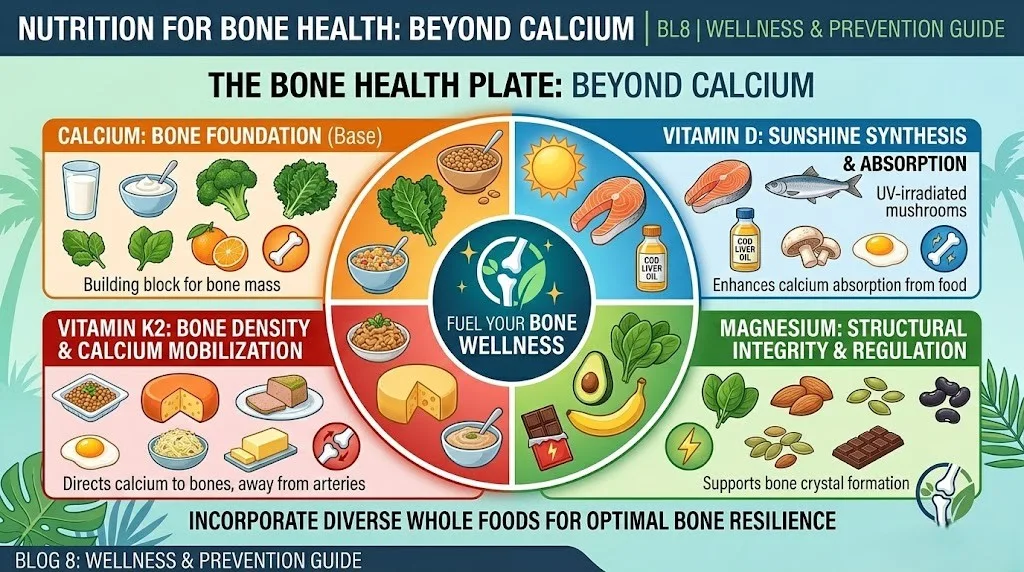
Calcium alone won't protect your bones. Without the right co-factors, much of the calcium you consume never reaches your skeleton. Studies show that up to 70% of dietary calcium can go unabsorbed when key supporting nutrients are missing. Calcium sets the foundation, but it needs Vitamin D, Magnesium, and Vitamin K2 to actually work. Think of it like building a house: calcium is the lumber, but you still need nails, a blueprint, and a crew.
This matters especially for Florida residents. Our active, outdoor lifestyle puts real demands on the skeletal system. Stress fractures, low bone density, and early osteoporosis are conditions we see regularly at our practice, and diet is often a contributing factor that gets overlooked.
Does Florida Sunshine Give You Enough Vitamin D?
Florida sunshine helps, but it's often not enough on its own. Your skin produces Vitamin D when exposed to UVB rays, but sunscreen use, shade-seeking during peak heat, and spending most of the day indoors can all limit production. Research suggests that adults need between 600 and 2,000 IU of Vitamin D daily for optimal bone metabolism, yet many Floridians test deficient despite living in one of the sunniest states in the country.
Vitamin D is what unlocks calcium absorption in the gut. Without it, even a calcium-rich diet won't protect your bone density. Good dietary sources include fatty fish like salmon, egg yolks, and fortified milk. If you're over 50 or have limited sun exposure, ask your doctor about testing your Vitamin D levels. A simple blood test can tell you exactly where you stand.
What Do Magnesium and Vitamin K2 Actually Do for Bones?
Magnesium and Vitamin K2 are two of the most underappreciated nutrients in bone health, and most people don't get nearly enough of either.
Magnesium converts Vitamin D into its active form. Without it, Vitamin D can't do its job. Adults need roughly 320 to 420 mg per day, but surveys consistently show that about 50% of Americans fall short. Magnesium-rich foods include dark leafy greens, pumpkin seeds, black beans, and almonds.
Vitamin K2 directs calcium into bones rather than letting it deposit in soft tissues like arteries. This distinction matters. Getting more calcium without K2 can actually increase cardiovascular risk. Fermented foods like natto and aged cheeses are the best dietary sources, though K2 supplements are widely available.
Together, these two nutrients act as traffic directors for the minerals in your body, making sure they end up where they're supposed to go.
Can a Mediterranean-Style Diet Strengthen Your Skeleton?
Yes, and the evidence is strong. A Mediterranean-style diet reduces chronic inflammation, which is one of the main drivers of bone loss. Chronic low-grade inflammation accelerates the breakdown of bone tissue, a process called osteoclast activity, faster than the body can rebuild it.
This eating pattern focuses on:
- Olive oil as the primary fat source, rich in oleocanthal (a natural anti-inflammatory compound)
- Leafy greens like spinach and kale for Vitamin K1, magnesium, and calcium
- Fatty fish like salmon and sardines for Vitamin D and omega-3s
- Legumes and nuts for magnesium and protein
- Whole grains over processed carbohydrates
Studies following older adults on Mediterranean-style diets show 20 to 30% lower rates of hip fracture compared to those eating standard Western diets. That's a meaningful difference, and it's achievable through consistent everyday food choices.
What Florida Superfoods Are Best for Bone Health?
Florida's local produce gives residents a real nutritional advantage. Fresh, seasonal foods available year-round in Central Florida are packed with the bone-supporting nutrients discussed above.
Look for these at your local farmers market or grocery store:
- Florida-grown sweet potatoes: Excellent source of magnesium and potassium, which helps maintain the body's acid-base balance and reduces calcium loss through urine
- Citrus fruits (oranges, grapefruit): Vitamin C supports collagen production, which makes up roughly 30% of bone tissue by weight
- Black-eyed peas and other legumes: High in both magnesium and plant-based calcium
- Mullet and local fresh fish: Available at Central Florida fish markets and packed with Vitamin D and omega-3 fatty acids
- Avocado: Rich in Vitamin K, magnesium, and healthy fats that support fat-soluble vitamin absorption
Many residents in the Heathrow and Lake Mary communities have access to excellent farmers markets and natural grocery options. Taking advantage of local produce isn't just a lifestyle choice. It's one of the most direct ways to feed your bones what they need.
Which Lifestyle Habits Build or Break Down Bone Density?
Nutrition covers roughly half the equation. The other half is how you move and what habits you maintain or avoid.
Weight-bearing exercise is the single most effective lifestyle intervention for bone density. Activities like walking, jogging, pickleball, resistance training, and even yard work force the skeletal system to adapt and strengthen. Aim for at least 30 minutes of weight-bearing activity, 4 to 5 days per week. Swimming and cycling are great for cardiovascular health but don't stimulate bone remodeling the way ground-contact activities do.
Habits that deplete bone density:
- Excess sodium: High sodium diets cause the kidneys to excrete calcium. Cutting back on processed foods is one of the most impactful changes you can make.
- Smoking: Reduces blood supply to bone tissue and interferes with calcium absorption. Smokers have bone density scores 10 to 20% lower than non-smokers on average.
- Alcohol: More than two drinks per day disrupts bone-forming cell activity.
- Sedentary behavior: Extended periods of sitting without weight-bearing activity reduce the mechanical stimulus bones need to stay dense.
For patients working with an orthopedic surgeon in Lake Mary, Florida, these lifestyle factors come up frequently in conversations about long-term joint and skeletal health. Nutrition and movement habits directly influence how well bones heal after injury and how patients respond to treatment.
Start Protecting Your Bones Now
Strong bones don't happen by accident, and they don't require perfection. Adding more magnesium-rich foods to your meals, getting outside for 20 minutes of walking around your neighborhood, and cutting back on processed sodium are small steps that compound over time.
At Central Florida Bone & Joint Institute, our team works with patients across the Lake Mary and Orange City areas to support long-term bone and joint health through both prevention and treatment. Our orthopedic services include everything from diagnostic evaluations to regenerative medicine options for those already dealing with bone and joint conditions. We also offer telemedicine appointments for patients who prefer to connect from home, with new patient self-pay consultations available for $75.
If you'd like personalized guidance from an orthopedic surgeon in Lake Mary, Florida, call (386) 775-2012 or visit us online to request an appointment. Taking care of your bones today is the most direct path to staying active, mobile, and independent for years to come.